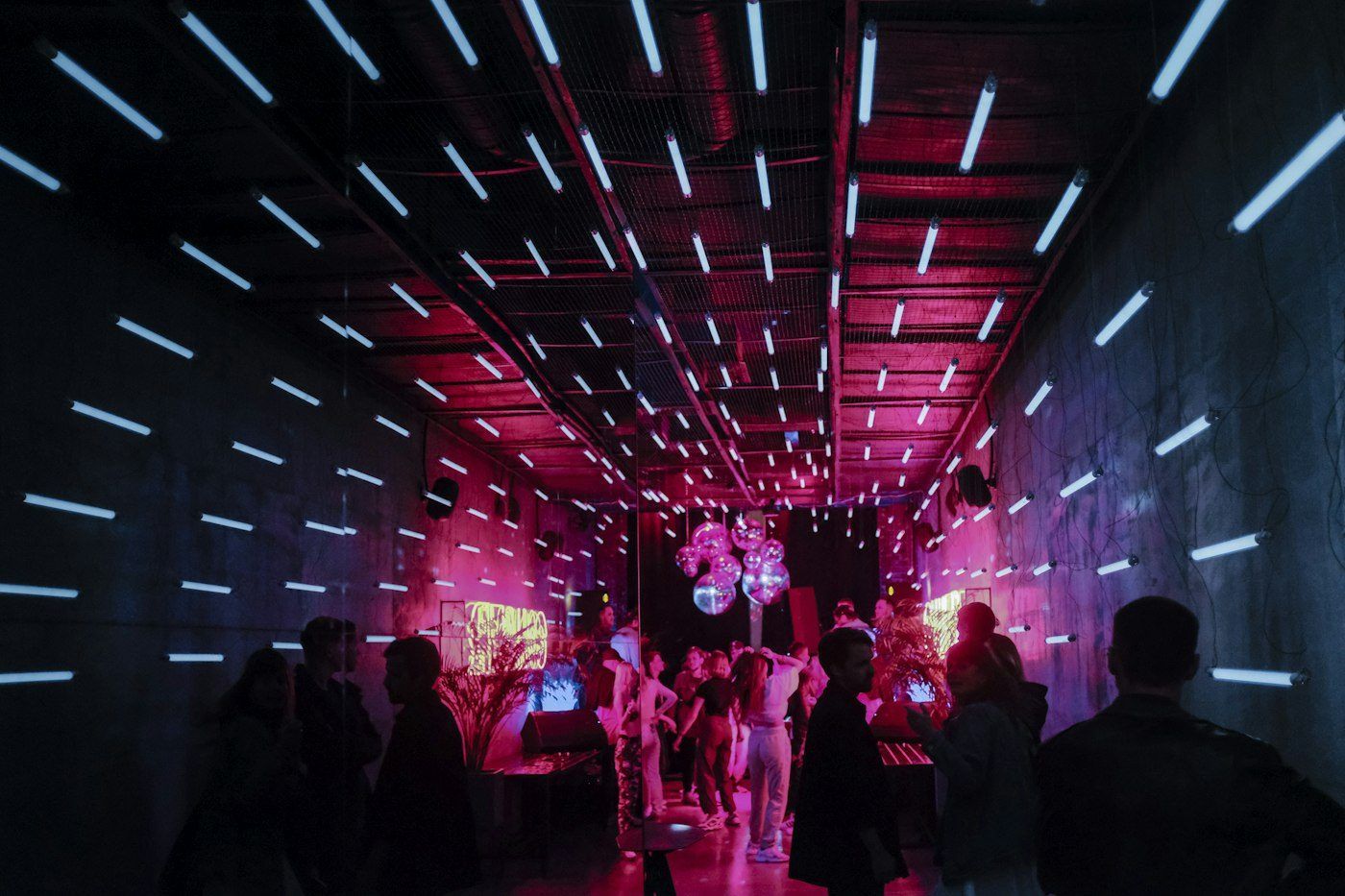
Big Room or Small Room: How Venue Size Changes the Night
 Therapy SoundField notes
You can book the same DJ into a 150-capacity room and a 1,500-capacity room and get two completely different nights out of them. The music might be identical on the rider. Everything else won’t be.
Room size shapes sound, crowd behaviour, and what a DJ is allowed to do with the set. Small rooms reward detail, patience and a crowd that’s paying attention. Big rooms reward momentum, big gestures and a sound system built to carry across distance. Neither is better. They’re just different tools, and knowing which one you’re walking into changes how you plan the night, what you wear, and what you should expect to feel by 2 a.m.
Sound Behaves Differently Depending on the Box It’s In
A small room is a tight box. Sound bounces off close walls fast, so a system doesn’t need to work as hard to feel loud and present. You feel the kick drum in your chest almost immediately because there’s less air between you and the speaker.
A big room has to fight physics. Sound has to travel further before it decays, so the rig needs more power and more careful tuning to keep bass tight instead of muddy at the back. That’s why a system that sounds incredible in a warehouse can sound thin crammed into a basement, and why a small-room system turned up to warehouse volume just distorts.
Crowd Energy Scales Differently Than You’d Think
You might assume more people automatically means more energy. It doesn’t work like that in a straight line.
- Small room, 150 people. Everyone is close enough to see the DJ’s hands and close enough to each other that a shift in mood spreads in seconds. One group getting loud can pull the whole floor with them.
- Big room, 1,500 people. Energy pools in sections. The front near the stage can be peaking while the back is still finding its feet. A big room needs more time and more obvious cues to bring everyone to the same place at once.
- The in-between room. Mid-sized rooms, somewhere around 300 to 600, often feel the most electric because you get density without total anonymity. You can still recognize faces across the floor.
What a DJ Can Actually Get Away With
A set that works in a small room often leans into subtlety: a track left playing a beat longer than expected, a quiet passage that lets the room breathe, a transition so smooth half the floor doesn’t notice it happened. People are close enough to catch nuance, so nuance gets rewarded.
In a big room, subtlety can vanish into the size of the space. DJs playing to large capacities tend to reach for bigger signals: a clear drop, a recognizable vocal, a build that’s obvious from the back row as well as the front. That’s not a compromise, it’s the room telling the DJ what it needs to stay connected to people fifty metres away.
Where You Stand Changes What You Hear and Feel
In a small room, there often isn’t a bad spot. You’re close to the system no matter where you end up, and the whole room functions as one zone.
Big rooms have zones, and they feel genuinely different from each other:
- Near the stack. Maximum bass, maximum volume, minimum air to breathe. Great for losing yourself, hard on your ears over a long night.
- The middle. The balance point most people find and stay in: full sound, enough room to move, still close enough to feel part of the crowd.
- The back or sides. Sound arrives a touch delayed and softer, but you get space, air, and a wider view of the whole room. Good for conversation, good for recovering between peaks.
Door Policy and Pacing Shift with Capacity Too
Small rooms sell out fast and often don’t reopen the door once capacity is hit. The upside is a tighter, more controlled crowd all night. The downside is less flexibility if you’re running late.
Big rooms can usually absorb latecomers without changing the shape of the night, since the room is built to keep filling in gradually. That also means the peak moment lands later, since a big room needs more bodies in before the energy locks in.
Picking the Right Room for the Mood You Want
If you want to actually hear what a DJ is doing, track by track, choose small. If you want to disappear into a crowd and feel carried by something bigger than yourself, choose big. Mid-sized rooms split the difference and are often the sweet spot for a first night out in a scene you don’t know yet, since you get real crowd energy without total overwhelm.
The room isn’t a container for the night. It’s part of the instrument.
Therapy Sound · Vancouver events
House, techno and live shows across the city
Frequently Asked Questions
Is a big room always louder than a small room?
Not necessarily. A big room usually has a more powerful system because sound has further to travel, but a small room run hot can feel just as loud, or louder, at close range. Loudness depends on the system and the operator as much as the size of the space.
Why do some DJs play differently in big rooms versus small rooms?
Small rooms let subtle transitions and quiet passages register because people are close and attentive. Big rooms often need clearer, bigger musical gestures to stay connected to a crowd spread across more distance, so DJs adjust their set structure to match.
Where’s the best spot to stand in a large venue?
It depends what you want. Near the speakers gives you maximum bass and volume, the middle balances sound and space, and the back or sides give you a wider view and a break from the loudest point, with sound arriving slightly softer.
Are small rooms better for a first night out?
Not automatically better, but often easier. Small rooms have no bad spots and let you hear detail clearly. Mid-sized rooms are frequently recommended for a first time out because they offer real crowd energy without the scale of a large venue.