Choosing a Venue for Your First Concert vs Your First Club Night
 Therapy SoundField notes
A concert room and a club room can sit three blocks apart and still be built for completely different nights. One wants you facing forward. The other wants you facing each other. Knowing which is which changes how you dress, when you arrive, and whether you have a good time or a confusing one.
The quick version: concert venues are built around a stage and a fixed start time, so you can plan your night to the minute and expect a clear beginning, middle and end. Club nights are built around a sound system and a floor, so the room matters more than the schedule, and the night rewards you for staying loose. Pick based on what you actually want — a performance to watch, or a room to move through.
The stage changes everything
A concert venue is designed around sightlines. Seats, risers, a raised stage, sometimes a balcony — all of it exists so that everyone in the room can see the same thing at the same time. The sound follows the stage. It’s mixed to project outward, toward you, the audience, watching something happen.
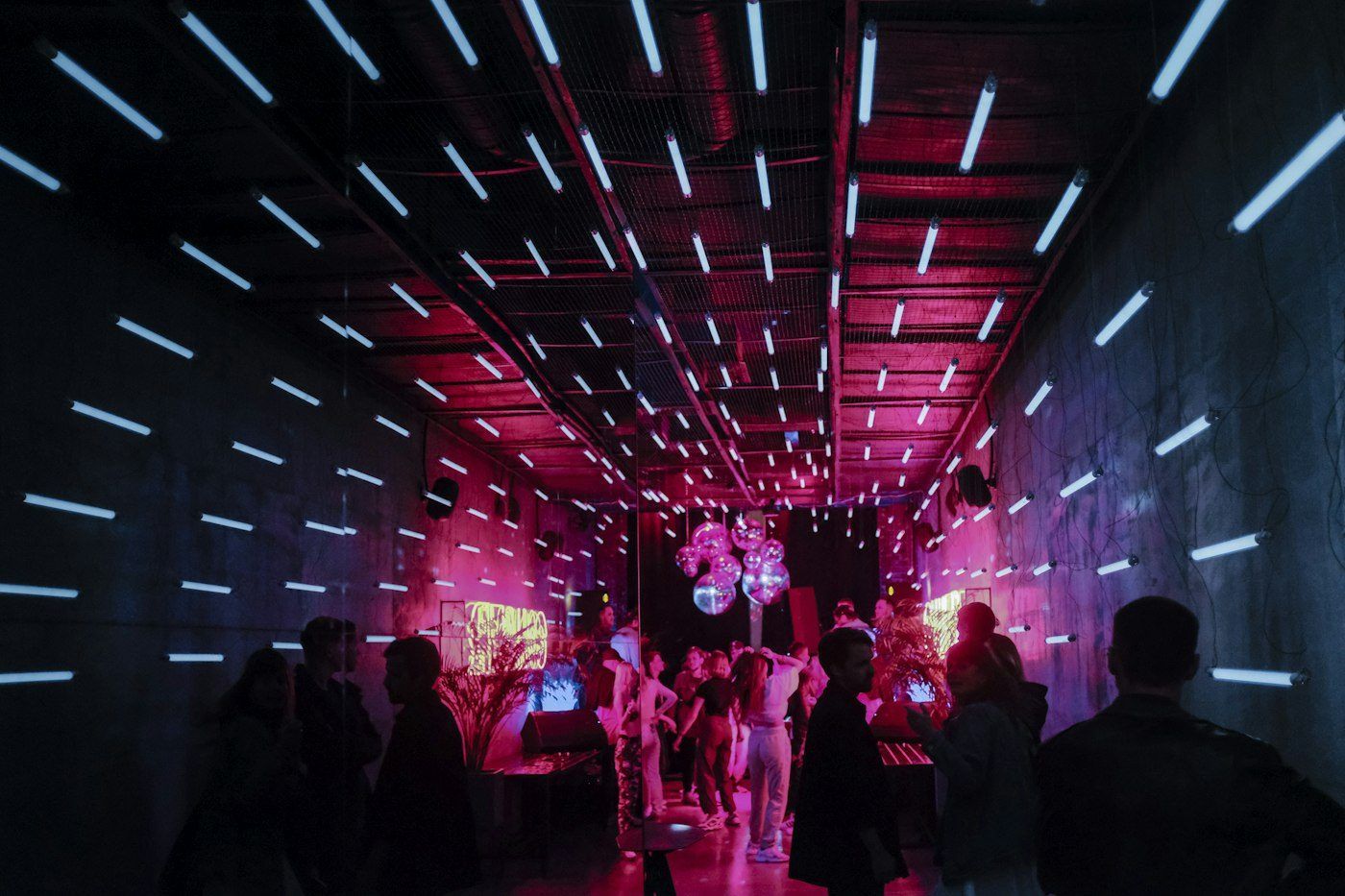
A club room has no stage in that sense. The DJ booth is usually at floor level or close to it, often tucked to one side. The sound isn’t projecting at you from a fixed point — it’s filling the room so that wherever you stand, you’re inside it. That’s a different physical experience before a single note tells you anything about the music.
Arrival time means different things
At a concert, doors and set times are the whole plan. Openers go on, the headliner follows, and the night has a shape you can read off a ticket. Show up on time and you’ve done the main job of planning the night correctly.
At a club night, the posted start time is more of a suggestion than a schedule. The room is often close to empty for the first hour or two while a warm-up set builds the floor. Arriving right at the door time usually means an easy entry and a quiet room, not the peak of the night. Neither is wrong. They’re just different contracts between the room and your evening.
What the room asks of your body
- Concerts ask you to stand still or sway. Even general admission floors tend toward a forward-facing crowd, packed shoulder to shoulder, attention on the stage.
- Club floors ask you to move through space. People shift, circle, find a spot near a speaker or near the booth, and the crowd reshapes itself all night.
- Seated venues ask for stillness. A room like the Orpheum is built for listening in a fixed seat, which suits a very different kind of show than a general admission night.
- Standing rooms ask for stamina. A general admission hall like the Commodore Ballroom has a sprung floor built for a crowd that’s on its feet and moving for hours.
If you don’t know which kind of night you’re walking into, check whether tickets are assigned seats or general admission. That one detail tells you almost everything about how the room expects you to behave.
Sound is built for a different job
A concert sound system is mixed for clarity on a vocal or an instrument, pushed outward so detail carries to the back row. A club system is mixed for low end you feel as much as hear, built to fill a dance floor evenly rather than aim at a back wall. Standing near a club speaker stack for the first time can be a genuinely different physical sensation than standing at the back of a seated hall. Neither is louder in a simple sense — they’re loud in different places on your body.
The door and the dress code tell you what’s expected
Concert doors are usually straightforward: ticket scan, maybe a bag check, in you go. Dress is whatever suits the artist and the room — nobody’s reading your outfit for intent.
Club doors can be more of a read. Staff are often watching for whether you understand the room you’re walking into, which is less about clothes and more about vibe. Comfortable shoes and something you can move in matter more than anything else you’d wear to a show.
Picking your first night of each
For a first concert, look for a room size that matches how close you want to be. A smaller venue puts you nearer the stage with less separation between you and the performance. A larger hall trades intimacy for a bigger sound and a bigger crowd.
For a first club night, look for the length of the lineup and the time the headline set actually starts, not just the door time. A night with a long, clearly listed arc — warm-up through to a later main set — gives you room to ease in rather than arriving cold into a peak.
A stage tells you where to look. A floor tells you where to stand. Know which one you’re walking into before you pick your night.
If you’re still not sure which to choose
Ask yourself one question: do you want to watch something, or do you want to be inside something. A concert gives you a performance in front of you. A club night gives you a room around you. Both are worth your first time out. They just aren’t the same kind of first time.
Therapy Sound · Vancouver events
House, techno and live shows across the city
Frequently asked questions
Should I arrive early for a club night the way I would for a concert?
Not usually. Club nights are often quiet for the first hour or two while a warm-up set builds the room, so arriving right at the door time typically means a calm, uncrowded entry rather than the peak of the night.
Is a club sound system actually different from a concert venue’s?
Yes. Concert systems are generally mixed to project clarity outward toward a seated or standing crowd facing a stage. Club systems are built to fill the whole floor evenly, with more emphasis on low end you feel physically.
What should I check before buying a ticket to tell these apart?
Check whether the listing is assigned seating or general admission. Seated shows are built for stillness and a fixed sightline, while general admission nights are built for a crowd that moves and reshapes itself.
Does the dress code matter more at a club night than a concert?
It’s less about strict dress codes and more about practicality. Club nights reward comfortable shoes and clothes you can move in for hours, while concert attire is usually whatever suits the show.
Therapy Sound is Vancouver’s guide to every sound in the city, checked and explained.